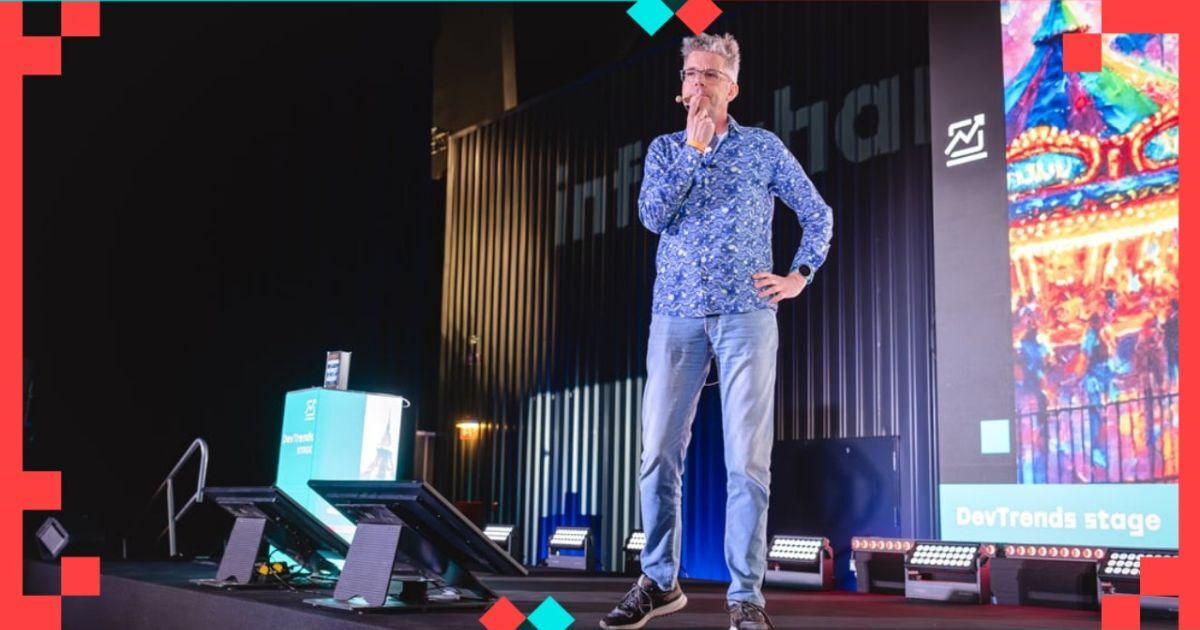
VIEW SPEECH SUMMARY
- AI is automating specialized tasks, urging humans to diversify skills (M-shaped) to remain relevant.
- Having multiple specializations allows for cross-domain innovation and reduces risk of obsolescence.
- The advantage humans have is integrating knowledge broadly, unlike AI’s limited scope in trained areas.
Changing Team Dynamics and AI’s Impact on Team Size
- Ideal team sizes are shrinking due to AI’s capabilities, with small groups or even “teams of one” becoming effective.
- Organic, flexible teaming (swarming and re-teaming) as practiced in hospitals and emergency services may become common in software development.
- Despite smaller teams, social connection remains essential for human well-being.
AI’s Role in Enhancing Work and Information Access
- AI promises context-aware support, delivering real-time, accurate data (e.g. software architecture, patient info) increasing productivity.
- This reduces cognitive load by eliminating the need to memorize outdated or complex information.
- Collaboration between humans and AI will redefine cognitive boundaries and teamwork structures.
Experience and Hyper-Personalization Considerations
- The speaker shares ideas about print-on-demand books with personalized elements or adjustable content based on customer preferences.
- However, he questions whether hyper-personalization truly enhances experience or human connection.
- AI can simulate user personas to test products and content, offering rapid, consistent feedback.
Human Connection and Future Value
- As AI and technology abundance grow, human connection will become more valuable and possibly more costly.
- Human interaction in services like therapy or nursing may differentiate premium offerings from AI substitutes.
Skill Decay and the Risk of Over-Reliance on AI
- Overdependence on AI tools risks degrading human skills, especially for quality control roles.
- Examples include software engineers losing coding skills from only reviewing AI-generated code.
- Fields like driving (self-driving cars) need regulation to ensure humans maintain intervention skills.
Challenges for Juniors and Interns in AI Era
- AI may replace junior roles, making early-career job acquisition tougher.
- This risks the future workforce pipeline and organizational knowledge transfer.
- Juniors provide value by challenging assumptions of experienced workers, preventing stagnation.
Artificial General Intelligence (AGI) Perspectives
- AGI should be defined by AI’s ability to perform complex human-care tasks (e.g., childcare), not just solving complex equations.
- True general intelligence involves handling everyday human activities, requiring broad understanding and adaptability.
Actionable Items and Points to Consider
- Embrace broad skill sets (M-shaped professionals) to stay competitive alongside AI.
- Foster flexible, organic teams over fixed team structures to leverage AI-enhanced workflows.
- Prioritize continued practice of core skills to avoid degradation due to AI assistance.
- Develop regulation or standards ensuring human competency in oversight roles (e.g., self-driving car intervention).
- Create training programs and opportunities that integrate juniors to maintain organizational future readiness.
- Leverage AI for rapid prototyping, user-testing, and personalized customer experiences, but beware of losing shared human experiences.
- Reflect on definitions of AGI focusing on real-world human skills, not only technical benchmarks.

Human Robot Agent: Redesigning Work in the Age of AI
11:30 - 12:00, 27th of May (Tuesday) 2025 / DEV TRENDS STAGE
Embrace the transformative power of the Fourth Industrial Revolution and its sweeping impact on the workplace, leadership, and organizational design. This session unpacks highlights from the new book Human Robot Agent, exploring practical strategies to embrace innovation, navigate complexity, and harness AI to thrive in a socio-technological and wicked world.
Learning Objectives:
1. Understand AI's Role in New Ways of Working: Identify how technology reshapes traditional business structures and ways of working.
2. Embrace Disruptive Innovation: Learn actionable approaches to lead change and be the disruptor rather than embracing change and be the disrupted.
3. Cultivate New Skills and Mindsets: Explore the shift towards multi-skilled (M-skilled) workers and leadership adaptability in AI-driven networks.
4. Design for a Dynamic Future: Discover patterns and practices for building vital, dynamic, versatile, and ethically conscious organizations.